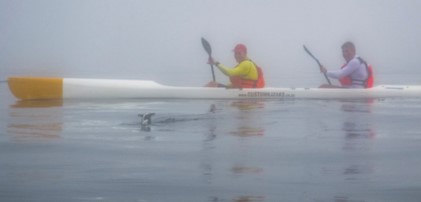
When you run trips out on the ocean, there are a number of conditions that can be cause for caution. One of these, especially when you are paddling on the Atlantic side, is FOG.
We arrived for a 9:15 paddle yesterday morning to beautiful sunshine and only a very light breeze. Within the 15 minutes of setting up the boats and getting everyone ready, the weather had flipped entirely as the fog descended rapidly. We obviously chose to stay on shore and opted to have coffee while we waited for the fog to lift.


But it got me thinking about the times I have got lost in the fog and what I would do if I got lost again.
One of the most common questions we get asked is what is the difference between fog and mist. So let’s start with the definition:
“Fog and mist differ by how far you can see through them. Fog is when you can see less than 1,000 metres away, and if you can see further than 1,000 metres, we call it mist.”
Source: https://www.metoffice.gov.uk
The problem for us is that both occur fairly commonly on our coastline. Paddling in the mist can be beautiful, peaceful and awe-inspiring. Paddling in the fog can be petrifying because you cannot see land and no one can see you. You can experience a very rapid decline in the air temperature when paddling in mist and fog.
Naturally, if one notices the fog approaching, then the best thing to do is get off the water as fast as possible. Not being able to see your landing site, other boats on the water, or navigate clearly to shore is not a position you want to be in if you can help it. It is easier to go in the wrong direction than you might think.
All my paddling friends who have been caught in the fog remarked about how completely disorientating it was. Paddling near harbours, one runs the risk of paddling into the shipping lane or over an area of breaking waves!
In those times, don’t be fussy about getting back to your particular launch site. Just find a safe area to get off the water and make for it as fast as possible. Even if it is not your original launch site, land at the nearest beach and wait it out or phone a friend.
If you cannot get back to land, look for a recognised landmass, for example, Roman Rock Lighthouse, Ark Rock or the rocks off Clifton Beach. Paddle up to them and stay within arm’s reach or anchor yourself if possible. That way, you cannot drift further out to sea, and the landmass will show on a motorboat’s GPS.
The question remains: what if you do not manage to get off the water in time?
The first thing I would recommend is that you make sure everyone in the party is as warmly dressed as possible. Put windbreakers back on and secure everyone’s PFD. Fog is chilly by nature, and having paddlers cold and lost can lead to a rapid sense of humour failure.
Before setting off again, tie all the boats together, nose to tail, with a leader in the front and the appointed leader at the back of the train of kayaks. Nothing is worse than losing a mate in the fog.
The next thing I would do is get one of the paddlers to blow the whistle every two minutes or so. Kayakers in the fog have a very real possibility of getting run over by other craft that are lost, and without AIS, there is no telling where they are. Likewise, they cannot see you.
A whistle also alerts other kayaks in the area that you are near and may help them locate your group and band together.
If you have to paddle back to land because there is no landmass nearby, hypothermia is setting in, or the crew is panicking, then tie everyone together. You don’t want to lose anyone in the blink of an eye.
If someone has Google Maps on their cellphone, use that to get a sense of which direction to go. Don’t trust your own bearing. Some of the more expensive Garmin watches have a “Take Me Home” option, which, in my experience, works very well.
Blow your whistle every minute or so to alert other boaters and paddlers around you of your presence.
The NSRI app, SafeTrx, also has an Explorer icon on the first screen that will pinpoint your position within seconds and is great for navigating in the fog. Just remember to switch the map over to SAT view for a realistic view of the coastline.
The big advantage of using the SafeTrx app is that if anything else goes wrong, one can quickly call for help.
The golden rule for assistance is:
CALL FOR HELP EARLY!
If you think things may go wrong, call for help. The NSRI needs time to launch their craft before they can come and find you.
Once you have an idea of which direction you need to head, start paddling slowly and carefully, listening out for other whistles, calls for help and oncoming motorboats!
IMAGE: Derek Goldman